
REFORESTAR 1 PANAMA
Solutions For A Healthier Life, A Sustainable Future and
A Cleaner World.
"Support Ecology Using Lumber From Reforested Plantations"

EN DESARROLLO
National Parks & Reservations
El Parque Internacional La Amistad (también llamado PILA), It is a transboundary park, was created by Costa Rican (PILA-Costa Rica) and Panamenian Governments (PILA-Panama) to meet the Reserve of the Cordillera de Talamanca and La Amistad National Park, respectively, into a single entity where management is shared between the two nations. The park was declared a World Heritage Site by UNESCO in 1983, and declared International Peace Park, to follow the recommendation of Unesco in 1988. It has an area of 401,000 ha in Costa Rica exist (193,929 ha) in the provinces of San José, Cartago, Limón y Puntarenas being most inaccessible part of Panama (207,000 ha) is difficult to access, having largely unexplored park, covering the provinces of Bocas del Toro and Chiriqui. Is composed mostly of rainforest, collects the area of the Cordillera de Talamanca, where the highest peaks of the two countries.
Parque Nacional Coiba:
270,125 Ha (210,000 of them natural area), created in 1991 with 60 islands in their natural state and declared a natural heritage site in 2005. Coiba is the largest tropical forest uninhabited island still remaining for the Americas. The water contains the largest coral reef in the American Pacific coast and along the adjacent Gulf of Chiriqui, constitute the area of greatest biodiversity of fish around the Eastern Tropical Pacific Ocean.al.
Parque Nacional Chagres:
This park of 129.585 hectares, protects the watershed of Lake Alajuela and upper Chagres River. Both sources provide drinking water to half the country's population and 40% of the water needed to operate the Panama Canal.
Parque Nacional Darién:
The Darien National Park is the second largest protected area in Central America with 1.5 million of virgin forest. The park is internationally renowned for its natural and cultural wealth, has been declared a UNESCO World Heritage Site and Biosphere Reserve of Man.
Reserva Natural Punta Patiño:
Ancon created this reserve of 30,000 hectares, being the first private nature reserve in Panama. It is located in the province of Darien, Pacific slope, at the mouth of Tuira River in the Gulf of San Miguel at 8.25 km southwest of the city of La Palma, capital of the province of Darien and 18.75 km northeast of Garachiné community, district Chepigana. Part of the wetland is within the Private Reserve Punta Patiño. According to Wetland Inventory (2010), the Punta Patiño wetland is an area that stretches along the coast of Darien and contains a variety of ecosystems, including swamp forests as mangroves and cativales, plus extensive muddy beaches in mouths of estuaries Mogue, Mogocénega, Quebrada Honda and Patiño. It is recognized that this site is important to the economic livelihood of the surrounding communities engaged in artisanal fishing for shrimp, fish and lobster, among others. This reserve is home to a variety of ecosystems such as mangroves, beaches, dry forests, rain forests and cloud forests. The mangrove forests of this reservation representing 10% of the forests of its kind in the Pacific Coast of Panama. The Embera Indians meanwhile, continue to live and practice their ancestral traditions in this region.
Other Areas of Conservation Interest:
Parque Nacional Marino Isla Bastimentos:
With an area of 13,226 hectares, of which 11,596 are marine, the Isla Bastimentos National Marine Park was established in 1988. It is located in the archipelago of Bocas del Toro, in the province of the same name. In the north of the protected area is Long Beach, is a very important breeding of sea turtles. On the south coast of the island lagoon Almirante is located, with its numerous canals that meander between the mangrove islets surrounded by coral and sandy bottoms covered by seagrass (Thalassia testudinum). The park preserves the largest expanse of country's Caribbean mangroves and coral reefs of the best preserved coast, dominated by red mangrove (Rhizophora mangle) and white (Laguncularia racemosa). Inside the Bastimentos Island is the only freshwater lake known in an insular area of Panama where you can find terrapins (Trachemis scripta), babillos (Caiman Crocodylus) and crocodiles (Crocodylus acutus).
The Slippers keys, in the northeast corner of the park, are formed by two islands 34 and 14 hectares respectively surrounded by spectacular white sand beaches and coral reefs occupy 500 hectares. The many species of coral, fish richness and variety of their marine invertebrates make this national park in one of the most unique in the Caribbean.
Parque Nacional Santa Fé:
In the area of the Atlantic slope Veraguas and extending to the lowland forests, with 72.636 hectares, was created in December 2001.
Parque Nacional Soberanía:
This park, with 22, 970 hectares is currently one of the most accessible reserves of tropical forest in the whole area of Central America.
Parque Nacional Camino de Cruces:
It is located in one of the buffers southeast of Sovereignty Park and currently has 4,550 hectares.
Other Areas of Conservation Labor
RAMSAR Wetland is the Gulf of Montijo, the Cope National Park, Portobelo National Park Recreation Area Gatun Wildlife Refuge Playa La Barqueta, Book Hydrological Filo del Tallo (Darien) and Forests former Canal Zone.
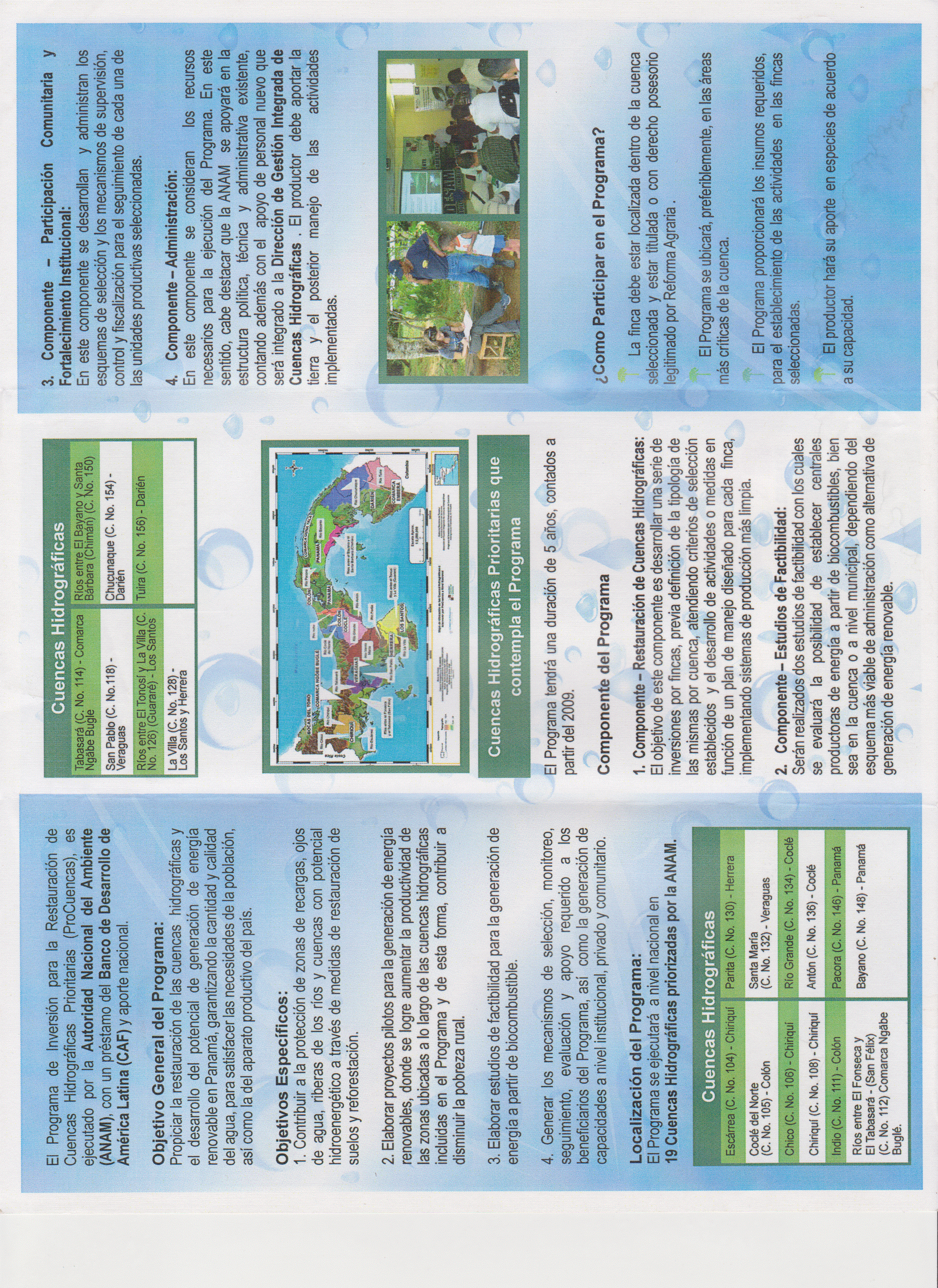
Programa De Inversión Para La Restauración De
Cuencas Hidrográficas Prioritarias.
Provincias de Chiriquí, Veraguas, Coclé, Herrera, Los Santos y Panamá.
 |
|---|
 |
 |
 |
 |
 |
 |
 |
 |
 |
 |
 |
 |
 |
 |
 |
 |
 |
 |
 |
 |
 |
 |
 |
 |
 |
 |
 |
 |
 |
 |
 |
 |
 |
 |
 |
 |
 |
 |
 |
 |
 |
 |
 |
 |
 |
 |
 |
 |
 |
 |
 |
 |
 |
 |
 |
 |
 |
 |
 |
 |
 |
 |
 |
 |
 |
 |
 |
 |
 |
 |
 |
 |
|
 |
 |
 |
 |
 |
 |
 |
 |
 |
 |
 |
 |
 |
 |
 |
 |
 |
 |
 |
 |
 |
 |
 |
 |
 |
 |
 |
 |
 |
 |
 |
 |
 |
 |
 |
 |
 |
 |
 |
 |
 |
 |
 |
 |
 |
 |
 |
 |
 |
 |
 |
 |
 |
 |
 |
 |
 |
 |
 |
 |
|
|---|
 |
|
 |
|
 |
 |
 |
|
 |
|
|
 |
 |
 |
 |
|
 |
 |
 |
|
|
|
 |
|
|
|
|
|
|
|
|
|
|
|
|